
Fractions
Help your child understand what fractions mean before moving into comparison, equivalence, number lines, or operations.
Core idea
A fraction names part of one whole
The whole might be one shape, one snack, one cup, or one group of objects. Once your child can identify the whole, the fraction becomes much easier to explain.
Start with the whole
Before naming any fraction, identify the complete shape, object, amount, or group being split.
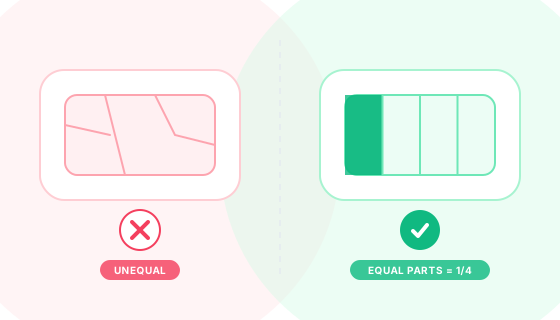
Check for equal parts
Fractions only work when the parts are the same size or represent fair shares of the same whole.
Connect words to symbols
Say the meaning first, then write the fraction so the numerator and denominator have a clear job.
Start here
Fraction topics
Start with understanding fractions before moving into comparison, equivalence, number lines, or operations.

Converting Fractions
Convert decimals, percents, mixed numbers, improper fractions, and simple measurements with clear steps.
Fraction Chart
Look up common fractions as decimals and percents with a printable conversion chart and denominator families.
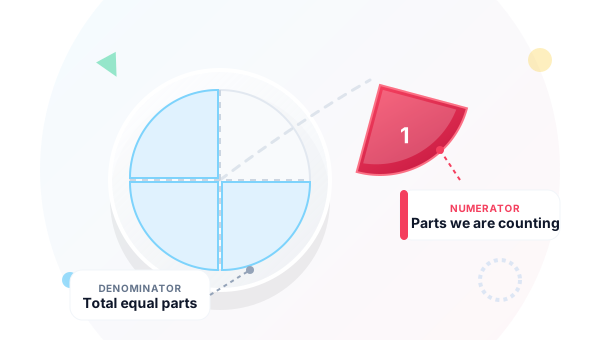
Understanding Fractions
Start with the meaning of fractions through clear visuals, simple examples, and parent-friendly explanations.
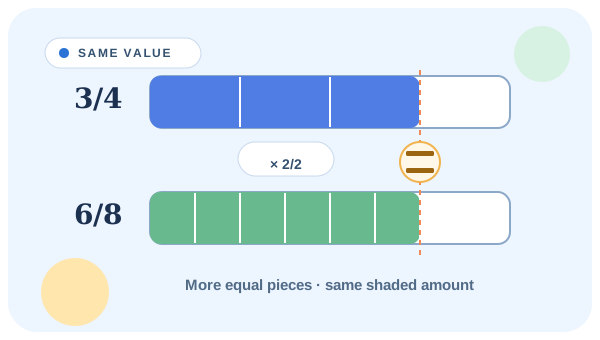
Equivalent Fractions
Use a visual calculator to find equivalent fractions, see why the value stays the same, and learn with clear examples.
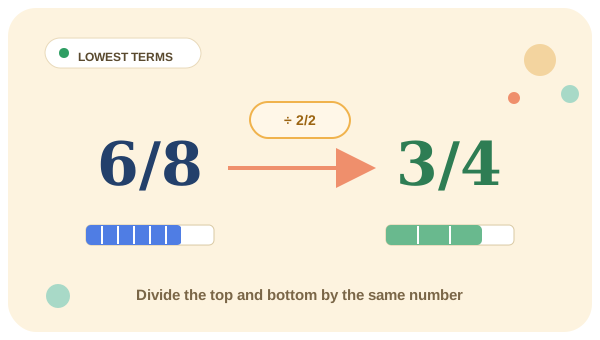
Simplifying Fractions
Reduce fractions to lowest terms with a step-by-step reducer, GCF shortcuts, and clear explanations of simplest form.
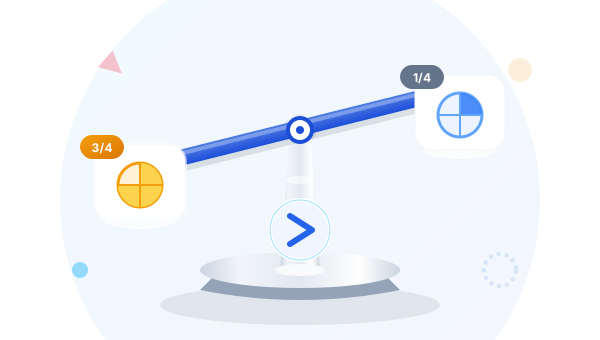
Comparing Fractions
Learn how to tell which fraction is greater by using visuals, benchmark fractions, and clear step-by-step reasoning.
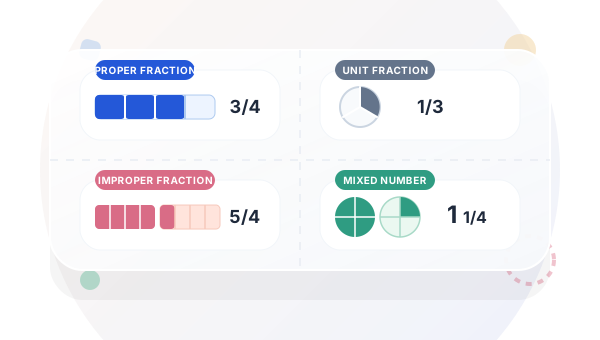
Types of Fractions
Identify proper fractions, improper fractions, mixed numbers, unit fractions, and equivalent forms with examples.
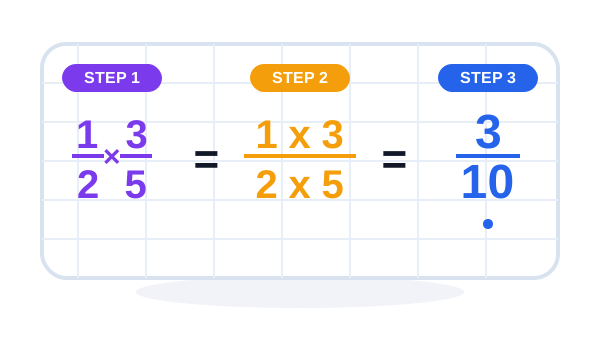
Multiplying Fractions
Multiply fractions, whole numbers, and mixed numbers step by step without guessing which rule comes first.
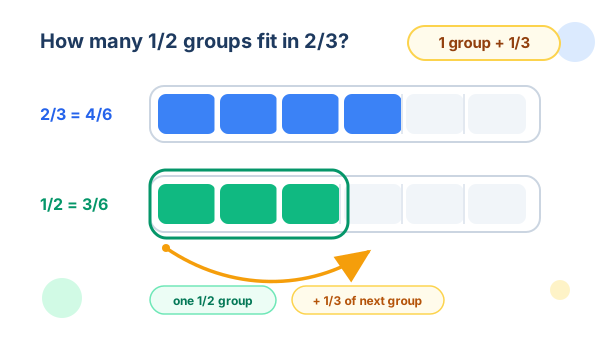
Dividing Fractions
Divide fractions, whole numbers, and mixed numbers with a step-by-step tool, clear reasoning, and visual support.
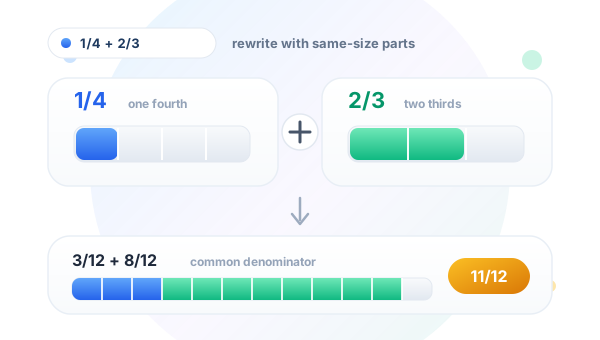
Adding Fractions
Add fractions, whole numbers, and mixed numbers with a visual tool that makes matching parts clear.
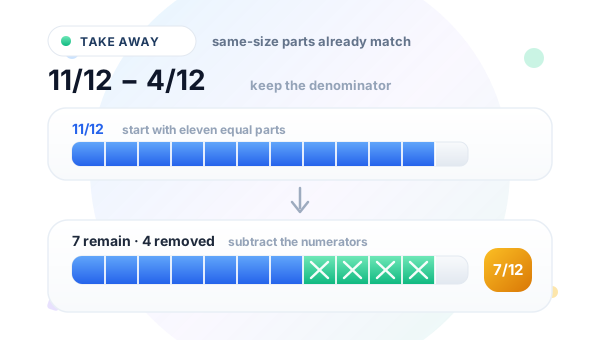
Subtracting Fractions
Subtract fractions, whole numbers, and mixed numbers with visual steps that make common denominators and regrouping clear.
All Four Operations
Add, subtract, multiply, and divide fractions in one place: the rule for each, the order to follow in mixed problems, and a calculator that names every step.
Algebraic Fractions
Fractions that carry variables: simplify rational expressions by factoring, solve fraction equations, and multiply rational expressions.
Why fractions need careful foundations
Fractions are not one skill. They are a chain of connected ideas.
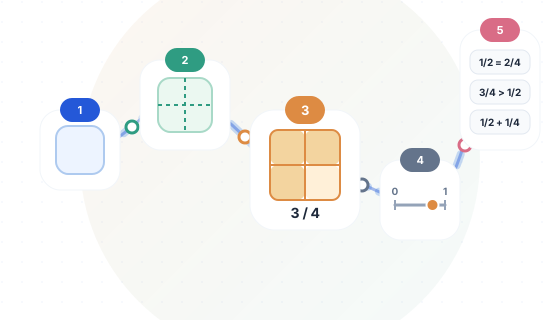
A child may first meet fractions as shaded shapes, but the topic quickly becomes much broader. They need to understand one whole, equal parts, numerator, denominator, comparison, equivalent fractions, number lines, and eventually operations. When those ideas are mixed together too early, homework can feel like a set of unrelated rules.
The safest starting point is always concrete: one whole, split into equal parts, with some of those parts counted. Once a child can explain that structure, later fraction work has something to attach to. Without it, symbols such as 3/4 can look like two unrelated numbers stacked on top of each other.
Mistake 1: counting pieces that are not equal.
Children may see four pieces and call one piece one-fourth, even when one piece is much larger than the others. Slow down and ask whether the pieces are fair shares of the same whole before naming the fraction.
Mistake 2: treating the numerator and denominator as separate counts.
The two numbers work together. The denominator describes how many equal parts make the whole. The numerator tells how many of those parts are being counted. Keep both numbers connected to the same model.
Mistake 3: forgetting what the whole is.
One-half of a small cookie is not the same amount as one-half of a large pizza. Fractions always depend on the whole being discussed, so name the whole before comparing or calculating.
Common misunderstandings
Most fraction mistakes start before the calculation.
When a child gets a fraction problem wrong, the issue is often not arithmetic. It is the picture in their head. Fix the model first, then the rule will make more sense.
The first lesson, Understanding Fractions, focuses on meaning before rules. That is intentional. Children who can explain what a fraction represents are better prepared for later work with equivalent fractions, comparison, and operations. Without that foundation, the later steps often become memorized procedures.
The same pattern works again and again: start with a visual model, connect the model to plain language, then introduce the symbols. If your child can move between those three forms, they are building real fraction sense instead of only memorizing steps.
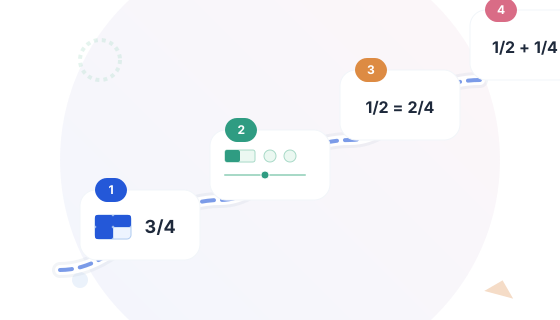
- 1. Meaning: name the whole, split it into equal parts, and count selected parts.
- 2. Representation: draw the fraction with area models, sets, and number lines.
- 3. Relationships: compare fractions and find equivalent fractions by reasoning from the model.
- 4. Operations: add, subtract, multiply, or divide fractions only after the meaning is steady.
Learning path
Start with meaning, then move toward more advanced fraction work.
Tips for Parents
Keep the first fraction conversation focused and visual.
The best support usually starts with a question, not a rule. Ask what the whole is, whether the parts are equal, and what the shaded or selected parts represent.
- Ask your child to point to the whole before they name the fraction.
- Check whether the parts are equal before counting how many parts are shaded or selected.
- Have your child explain the denominator as the number of equal parts in the whole.
- Have your child explain the numerator as the number of equal parts being counted.
What to build toward
Strong fraction sense prepares children for the harder work later.
Once the meaning is steady, children can start comparing fractions, finding equivalent fractions, placing fractions on number lines, and using fractions in word problems. Each new skill should still connect back to the same foundation: one whole, equal parts, and a clear count of the parts being used.
Understanding comes before shortcuts
A child who can describe the whole, the equal parts, and the selected parts is ready to understand later fraction rules.
Visual models reduce guessing
Circles, bars, number lines, and sets give children something concrete to inspect before they write an answer.
Language turns pictures into math
Simple sentences like “three out of four equal parts” help children connect the model, the words, and the symbol 3/4.
Common questions