
Elementary Math Help for Parents
Interactive tools and clear explanations for parents teaching math at home. LumaMath introduces one focused topic at a time so families can find useful help quickly without feeling overwhelmed.
What this site does
Clear tools for everyday math help at home
LumaMath combines interactive tools, simple explanations, and parent-friendly language so families can understand concepts together.
Interactive tools
See the idea instead of only reading about it.
Clear explanations
Use language that helps parents explain the “why.”
Focused topic hubs
Start with one strong topic, then build understanding from there.
Start here
Featured topics
We grow LumaMath one strong topic at a time: fractions came first, and percentages are here now.
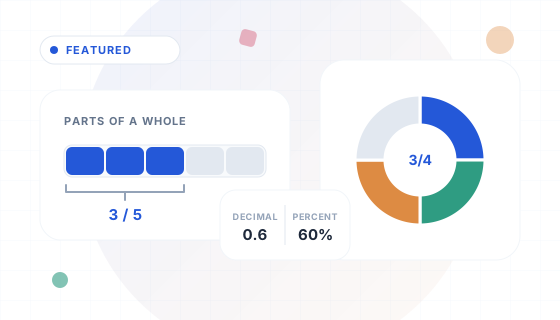
Fractions
Our first featured topic for Grades 3–5, combining interactive tools, clear explanations, and parent-friendly learning support.
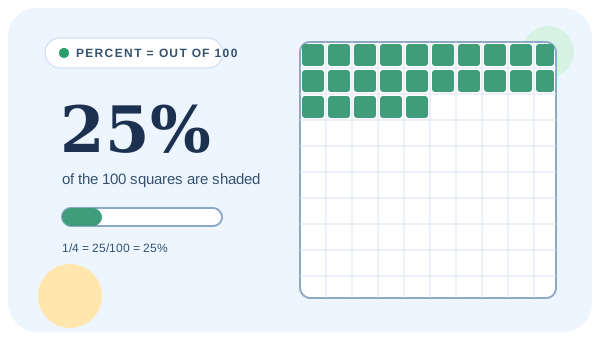
Percentages
Our newest topic, built on the same visual-first approach: percents as shares of 100, with an interactive explorer for the two core calculations.
Need to switch between decimals, percents, mixed numbers, and fractions?
Use the Fraction Converter →What LumaMath is for
A calmer way to explain math when homework gets stuck.
Many parents can solve elementary math problems, but explaining the idea behind the answer is harder. A child may ask why two fractions are the same size, why equal parts matter, or why a rule works at all. LumaMath is built for that moment. It gives parents a clear starting point, a simple visual model, and language that is easier to say out loud at the kitchen table.
The goal is not to rush children through more worksheets. The goal is to make one idea feel understandable before adding the next one. When a child can see the whole, point to the parts, and describe what is happening in their own words, the homework conversation becomes less about guessing and more about reasoning.
Why parents use this site
Clear enough to trust. Simple enough to use in the middle of homework.
LumaMath is not trying to replace classroom teaching. It is here to help parents explain one concept at a time with better language, stronger visuals, and less stress.
Built for explaining, not just answering
Each lesson helps you talk through the idea with your child, not just land on the final result.
Visual first, rules second
We start with models and examples so children can see what the math means before memorizing procedures.
Made for real homework moments
Use short sessions when your child is stuck, reviewing, or preparing for a quiz.
During homework
Use the site as a quick teaching aid, not a replacement for practice.
A good learning page should help a parent choose what to say next. LumaMath keeps each topic focused so families can use it in short sessions instead of reading a long textbook-style chapter.
Start with the picture.
Before naming a rule, ask your child what they see. A visual model makes abstract ideas feel concrete and gives the child something to point to when they explain their thinking.
Say the idea in plain language.
Children often understand more than they can express. Parent-friendly wording helps turn a math symbol into a sentence, such as “the whole is split into four equal parts.”
Return to the lesson when confusion comes back.
Understanding is not always permanent after one explanation. The site is designed so families can revisit the same core idea quickly before moving to harder examples.
How it works
A practical learning flow for parents and children to use together.
The homepage stays simple: explain the brand, point to the current featured topic, then help parents understand what makes the site useful.
- 1
Start with one topic
Begin with one focused math idea so your child can build confidence before moving on.
- 2
Use a visual tool together
Interactive models help children see what the math means while parents guide the conversation.
- 3
Turn confusion into understanding
Clear language and structured examples make it easier to explain the idea, not just finish the problem.
Understanding check
Look for explanation, not just the right answer.
A correct answer is useful, but it does not always show whether the idea is secure. LumaMath encourages parents to listen for the reasoning behind the answer.
Can your child describe the whole?
In many math topics, especially fractions, children get lost because they start with the numbers before they know what the numbers refer to. Ask what the whole is, what is being counted, and whether the parts are fair or equal. If your child can answer those questions, the symbol has a real meaning instead of being only a mark on the page.
Can they explain the same idea another way?
A strong explanation can move between a picture, a sentence, and a number. For example, a child might shade part of a circle, say “three out of four equal parts,” and then write 3/4. Moving between those forms is a sign that they are building understanding, not only copying a procedure.
Can they spot a mistake?
One of the best ways to check understanding is to show a near-miss example. If a shape is split into unequal pieces, ask whether it still represents a fraction correctly. If a child can explain why the example is wrong, they are learning the structure of the concept rather than memorizing a single answer pattern.
Our content approach
One strong topic is more useful than a crowded library of shallow pages.
LumaMath starts with fractions because fractions are one of the first elementary topics where children need more than memorization. They have to understand a whole, equal parts, symbols, comparison, and later operations. If the first idea is shaky, the later rules feel random. A careful topic hub gives families a better path through that sequence, and percentages now reuse that same foundation.
As the site grows, each new topic should earn its place. A page should answer a real parent question, include a visual explanation when it helps, and connect the lesson to the next reasonable step. That keeps the site useful for search visitors while staying practical for families who just need help tonight.
About LumaMath
Built to become a trusted elementary math resource over time.
We launched LumaMath with Fractions, and Percentages now build on that same foundation. The long-term goal is a broader library of topic hubs that help parents explain elementary math more clearly at home.
A trusted starting point for parents
LumaMath is designed to become a reliable elementary math resource that parents can return to across topics over time.
Focused launch, broader long-term vision
Fractions come first because they build habits children will need for decimals, word problems, measurement, and geometry.
Built around real search intent
Each topic is meant to combine usable tools, simple explanations, and question-driven content that matches what families actually search for.
Common questions